
Marvell Technology vs. Nvidia: What Do the Revenue Trends of These Artificial Intelligence Companies Tell Investors?
 2026-07-23 19:18
•Robert Izquierdo •The Motley Fool
••••• ••
2026-07-23 19:18
•Robert Izquierdo •The Motley Fool
••••• •• Axe Capital view
Decoding AI Growth: Nvidia vs Marvell and What It Means for JSE Investors
AI semiconductor giants Nvidia and Marvell illustrate contrasting growth styles that matter for local currency and select stocks.
Nvidia’s blistering AI-driven revenue growth underscores its dominance in the semiconductor space, with a staggering $81.6 billion in Q2 2026 revenue, dwarfing Marvell’s $2.4 billion. While Nvidia accelerates on GPU power, Marvell carves out steady gains supporting the AI infrastructure ‘picks and shovels’ niche. For South African investors, direct exposure is limited—Nvidia isn’t listed locally, and Marvell only indirectly impacts us. Instead, watch USD/ZAR closely. Nvidia’s success tends to boost US dollar strength, pressuring the rand, which can weigh on multinationals like Naspers and Prosus that earn in dollars but report in rands. Conversely, steady growth by players like Marvell could signal continued demand for global data infrastructure, supporting local financials such as Standard Bank and FirstRand, which benefit from digital transformation. If Nvidia’s growth falters as AI hype cools, the rand could rally, reversing some headwinds on rand-hedge stocks. this is just my opinion and not financial advice
I would watch USD/ZAR for momentum and be cautious on Naspers and Prosus, trimming exposure if the rand weakens further due to US tech strength. Meanwhile, consider selective exposure to local financials benefiting from underlying tech adoption but avoid chasing unproven small caps.
- USD/ZAR
- Naspers
- AI sector hype fades, stalling Nvidia revenue expansion
- Rand rebounds sharply, hurting dollar-earning JSE stocks
6/10
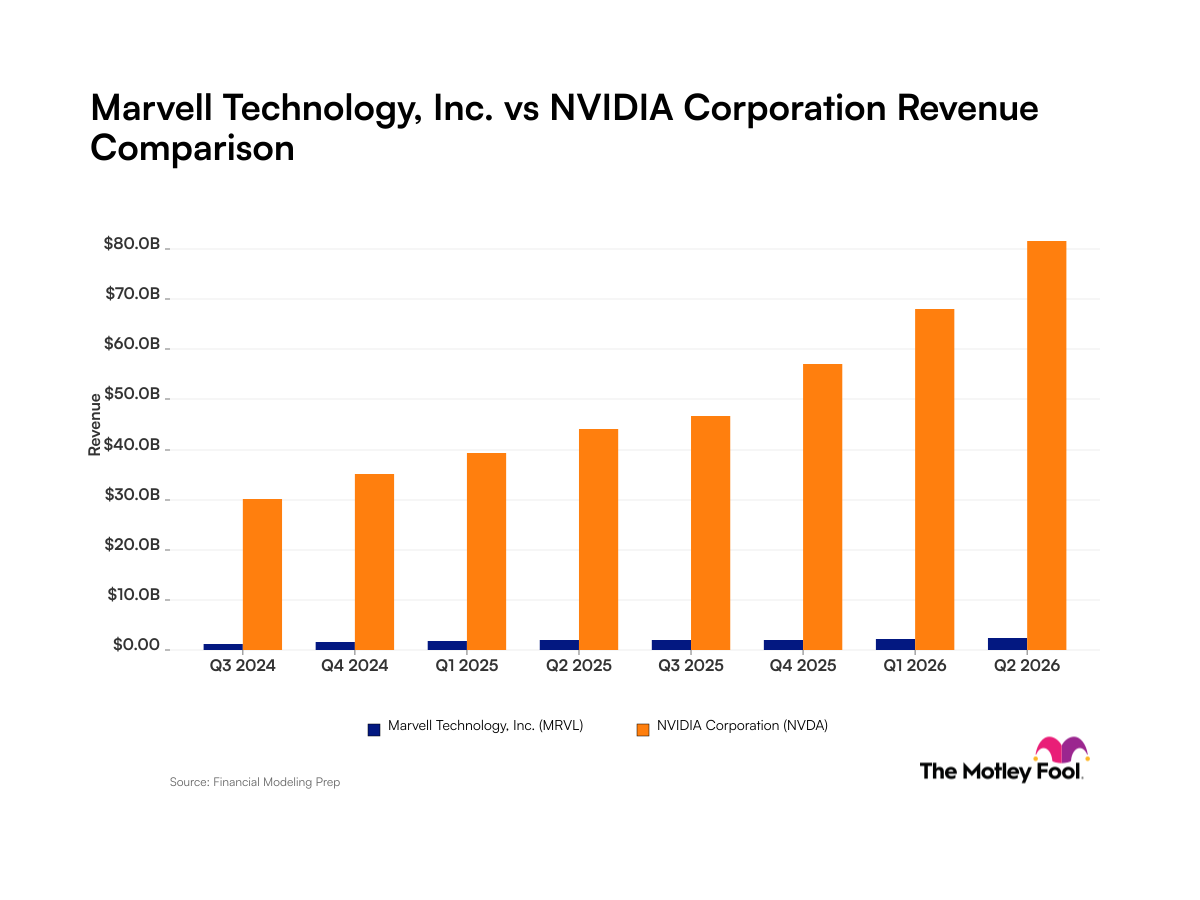
Nvidia and Marvell Technology have both experienced consistent quarter-over-quarter revenue growth driven by AI sector demand. Nvidia's revenue reached $81.6 billion in Q2 2026, demonstrating its dominance in AI semiconductors with a 34x revenue gap over Marvell's $2.4 billion. While Nvidia shows accelerating expansion, Marvell functions as an AI infrastructure 'picks and shovels' player with steady growth, recently added to the S&P 500.
This article was originally published by The Motley Fool and has been adapted here for Axe Capital Trading News.
Publisher: The Motley Fool
Author: Robert Izquierdo
Categories: Equities, Earnings, Technology, AI, Semiconductors
Tickers: NVDA, MRVL
Sentiment: Positive - Nvidia demonstrates exceptional revenue acceleration with Q2 2026 revenue of $81.6 billion, showing consistent quarter-over-quarter growth. The company's 66% EBIT margin and central role in the AI ecosystem, evidenced by partnerships like the Japanese government's national AI infrastructure project, indicate strong market dominance and customer demand. Marvell shows consistent quarter-over-quarter revenue growth from $1.3 billion to $2.4 billion over eight quarters, demonstrating solid demand for its data infrastructure solutions. Recent addition to the S&P 500 and 52-week high of $329.88 in June indicate positive market recognition, though its smaller scale reflects its supporting role in the AI infrastructure ecosystem.
Keywords: artificial intelligence, semiconductor chips, revenue growth, data infrastructure, AI ecosystem, quarter-over-quarter growth, S&P 500
Insights:
- NVDA: Positive: Nvidia demonstrates exceptional revenue acceleration with Q2 2026 revenue of $81.6 billion, showing consistent quarter-over-quarter growth. The company's 66% EBIT margin and central role in the AI ecosystem, evidenced by partnerships like the Japanese government's national AI infrastructure project, indicate strong market dominance and customer demand.
- MRVL: Positive: Marvell shows consistent quarter-over-quarter revenue growth from $1.3 billion to $2.4 billion over eight quarters, demonstrating solid demand for its data infrastructure solutions. Recent addition to the S&P 500 and 52-week high of $329.88 in June indicate positive market recognition, though its smaller scale reflects its supporting role in the AI infrastructure ecosystem.