
Navitas Semiconductor vs. ServiceNow: What Recent Quarterly Revenue Trends Tell Investors About These Tech Companies
 2026-07-24 20:04
•Robert Izquierdo •The Motley Fool
•••••••• ••
2026-07-24 20:04
•Robert Izquierdo •The Motley Fool
•••••••• •• Axe Capital view
ServiceNow's Steady Growth vs. Navitas' AI Gamble
ServiceNow thrives with steady SaaS growth while Navitas Semiconductor wrestles with a tough market shift.
ServiceNow’s latest quarterly revenue topping $4 billion with a solid 24% year-on-year rise shows it's still a rare breed of consistent cloud software growth. Its AI integration strategy appears to be winning investor confidence, which is not a small feat given how volatile tech has been lately. Navitas Semiconductor, on the other hand, paints a much riskier picture. Dropping sharply after exiting China—its biggest market in 2024—Navitas now says its AI pivot might be paying off after a modest revenue bounce. This recovery feels premature, especially since Navitas is still wrestling with the aftermath of a strategic retreat and a tough semiconductor sector. For investors watching the rand, these tech shifts underline the widening gap in global tech performance, making USD/ZAR a key barometer for risk appetite. The warning flag here is that Navitas' rebound depends heavily on execution in an uncertain AI chip market—one misstep and it could slide further. this is just my opinion and not financial advice
Buy ServiceNow for exposure to resilient AI-driven SaaS growth, but watch for market dips. Trim or avoid Navitas until we see clear Q2 confirmation of its AI strategy paying off.
- NOW
- NVTS
- USD/ZAR
- Navitas' AI pivot fails to gain traction
- Global tech market volatility impacting USD/ZAR and SA tech exposure
6/10
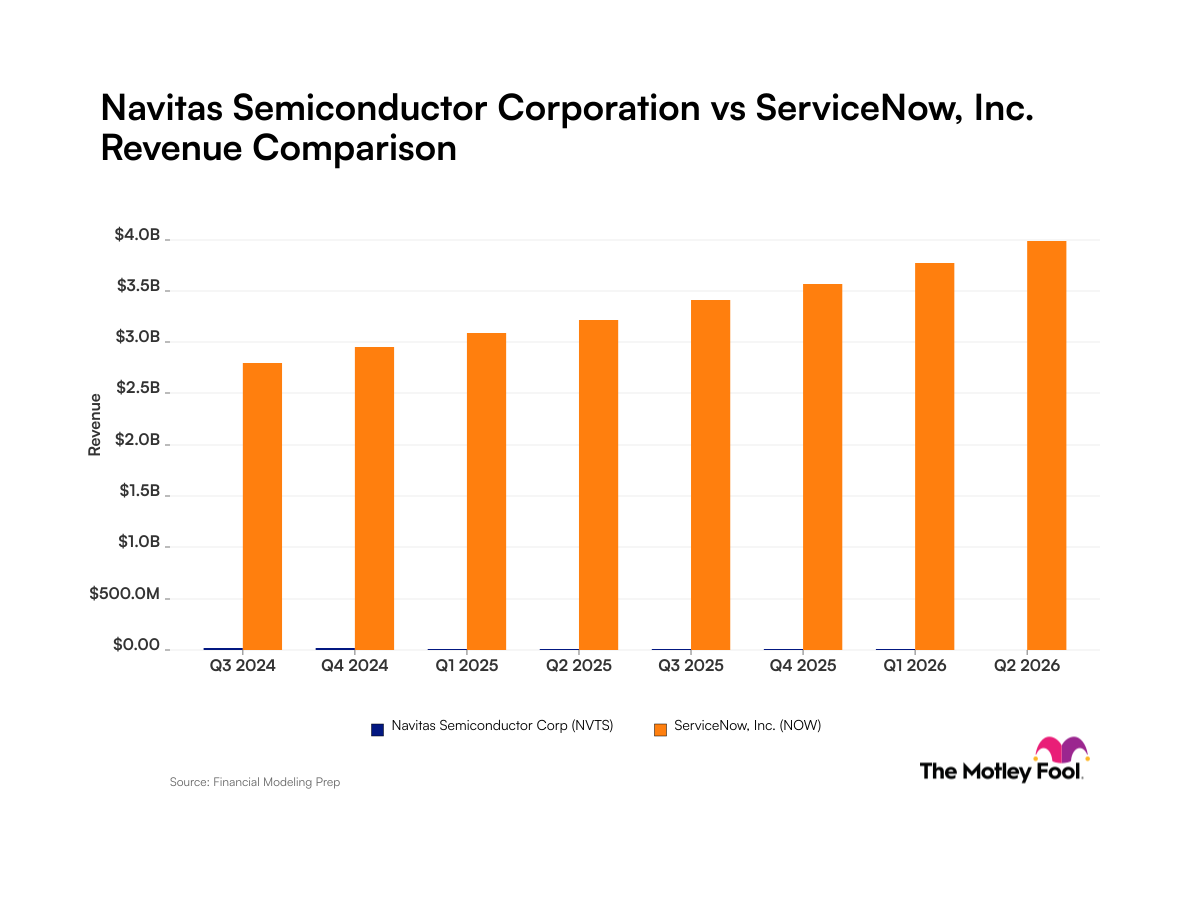
ServiceNow demonstrates consistent quarter-over-quarter revenue growth reaching $4 billion in Q2 2026, while Navitas Semiconductor experienced sharp revenue declines from $21.7 million to $7.3 million due to its exit from China's mobile and consumer businesses. However, Navitas showed signs of recovery with Q1 2026 revenue increasing to $8.6 million, suggesting a potential inflection point in its AI pivot strategy.
This article was originally published by The Motley Fool and has been adapted here for Axe Capital Trading News.
Publisher: The Motley Fool
Author: Robert Izquierdo
Categories: Equities, Earnings, Geopolitics, Technology, AI, Semiconductors, Consumer, Retail
Tickers: NVTS, NOW
Sentiment: Positive - Company experienced significant revenue decline due to strategic exit from China market (60% of 2024 sales), but recent Q1 2026 uptick to $8.6 million suggests potential recovery and successful AI pivot. Management expects continued rebound, warranting cautious optimism pending Q2 results. Demonstrates consistent quarter-over-quarter revenue growth reaching $4 billion in Q2 2026 with strong 24% year-over-year growth. Company successfully navigated AI-related sector concerns, raised full-year guidance, and stock rebounded from April lows, indicating solid business expansion and investor confidence recovery.
Keywords: quarterly revenue trends, revenue growth, AI pivot, semiconductor, cloud software, China market exit, SaaS stocks, data center power solutions
Insights:
- NVTS: Neutral: Company experienced significant revenue decline due to strategic exit from China market (60% of 2024 sales), but recent Q1 2026 uptick to $8.6 million suggests potential recovery and successful AI pivot. Management expects continued rebound, warranting cautious optimism pending Q2 results.
- NOW: Positive: Demonstrates consistent quarter-over-quarter revenue growth reaching $4 billion in Q2 2026 with strong 24% year-over-year growth. Company successfully navigated AI-related sector concerns, raised full-year guidance, and stock rebounded from April lows, indicating solid business expansion and investor confidence recovery.